



Best skincare for men: How to actually look after your face with our simple tips
Looking for the best skincare for men? Discover what actually works and expert tips on the best skincare for men of all skin types
W e get it — skincare can feel like a minefield. From serums to acids to three-step men’s skincare routines, it’s hard to know what’s actually worth doing, especially if you’re short on time (or patience).
The good news? Great skin doesn’t have to mean spending loads of money or adopting a 10-step skincare routine. You just need to understand how your skin works and give it what it needs.
Here’s your complete, no-nonsense guide to the best skincare for men – backed by science, explained in plain English, and broken down by skin type and concern.
We’re also got a load of guides on the best skincare for men for different skin types, or from different brands. These include:
- The best sensitive skincare for men
- The best skincare from Clinique for Men
- The best skincare from The Ordinary
- The best skincare from Perricone MD UK
- Best moisturiser for men
- Best face toner for men
- The best skincare products for getting rid of acne once and for all
TL;DR: The best skincare for men
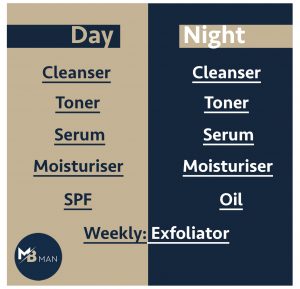
- Cleanser – Wash your face twice a day
- Moisturiser – Lock in hydration and protect the skin barrier
- SPF 30+ – Use daily, even when it’s cloudy
- Extras (optional) – Exfoliate 1–2x per week, treat with serums if needed (e.g. for acne, redness, or dark circles)
 MBman
MBman Skincare isn’t about perfection — it’s about consistency. Stick to a basic routine for a few weeks and give your skin time to respond.
And if you’re ever unsure what to buy? Start with these three words: cleanse, moisturise, protect. Everything else is a bonus. You can learn more in our men’s skincare routine guide, where we discuss the order of skincare and what each one does.
What type of skin do you have?
 Getty Images/iStockphoto
 Before you buy anything, figure out your skin type – it’ll help you pick products that actually work for your face. Most men have combination or oily skin due to higher testosterone levels, which boost sebum (oil) production.
If you’re not sure, read our What skin type do I have? guide.
- Oily: Shiny all over, especially your T-zone (nose, forehead, chin). We’ve got specific recommendations in our guide to the best skincare for acne.
- Dry: Flaky, tight-feeling, or rough in places
- Combination: Oily in some areas, dry in others
- Sensitive: Easily irritated, red, or sore. We’ve got specific recommendations in our guide to the best skincare for sensitive skin.
- Normal: Balanced — not too oily or dry
One 2020 study confirmed men produce more sebum than women — which is why clogged pores, blackheads, and acne are more common. Read it here
Step 1: Cleanse (aka wash your face properly)
Skip the soap and certainly step away from the 5-in-1 shower products that promise to clean everything.
A good cleanser removes dirt, oil, and pollution without stripping your skin.
- Best for oily/combination skin: Look for words like “oil control” or “foaming cleanser” and ingredients like salicylic acid, which helps clears pores by dissolving oil
- Best for dry/sensitive skin: Go for words like “gentle,” “hydrating,” or “non-foaming” on the bottle and look for ingredients like glycerin or ceramides. These both lock in moisture and repair your skin barrier
MBman tip: Use lukewarm water. Hot water dries you out, while cold water doesn’t always cleanse properly.
Step 2: Moisturise
 Getty Images/iStockphoto
 Even oily skin needs moisturiser. Skipping this step makes your skin produce more oil to compensate.
- Light gel moisturiser – For oily and combination skin
- Cream moisturiser – For dry or mature skin
- Fragrance-free – For sensitive skin
Look for niacinamide, hyaluronic acid, or ceramides. These ingredients help keep your skin hydrated, reduce redness, and strengthen your skin barrier.
One 2018 study found niacinamide helps with acne, fine lines and hyperpigmentation.
Step 3: Use sunscreen. Every. Single. Day.
Yes, even when it’s cloudy. Yes, even if you’re not on holiday.
UV damage is the number one cause of premature ageing and skin cancer. The NHS and dermatologists agree: SPF 30 or higher, broad-spectrum protection is essential.
- Dry or sensitive skin? Look for mineral sunscreens (zinc oxide or titanium dioxide)
- Oily or acne-prone skin? Go for oil-free or “non-comedogenic” formulas
Skin ageing is 80% caused by UV exposure, according to multiple studies.
Optional: Add skincare extras based on your needs
 Getty Images/iStockphoto
 If you’ve nailed the basics and want to go further, here’s where serums and extras come in.
Exfoliate 1–2x a week
Exfoliating involves gently removing the dead skin cells that naturally form, and it helps to unclog pores. This not only keeps your skin looking healthy, it also means your other skincare for men choices can better penetrate the skin.
Exfoliators come in different types, including physical scrubs and chemical masks. The best exfoliator for you will depend on your skin type, personal preference and budget but anything that contains salicylic acid (oily/acne-prone) or lactic acid (dry/sensitive) is a good place to start.
Targeted serums
- Acne? Look for serums or treatments that contain benzoyl peroxide or niacinamide
- Dark spots or uneven skin tone? Try vitamin C
- Ageing or fine lines? Use retinol (start with low strength). Retinol can also be good for acne too.
Retinol is clinically proven to stimulate collagen and reduce signs of ageing. Here’s the evidence
What skincare products should men actually use?
Here’s a quick starter kit by skin type:
| Skin Type | Cleanser | Moisturiser | Extras |
|---|---|---|---|
| Oily/Acne-Prone | Foaming cleanser with salicylic acid | Gel moisturiser | SPF + salicylic exfoliator |
| Dry/Sensitive | Cream cleanser | Rich moisturiser with ceramides | SPF + lactic acid exfoliator |
| Combo Skin | Balancing gel cleanser | Lightweight cream | SPF + vitamin C serum |
Skincare myths (and what to ignore)
- “Men don’t need skincare” – Wrong. Male skin has larger pores, more oil, and thicker texture. It needs looking after.
- “Natural products are always better” – Not necessarily. Some essential oils and botanicals can irritate sensitive skin.
- “You only need SPF on sunny days” – Nope. UVA rays (the ones that age you) are present all year-round.

Subscribe to the MBman newsletter to stay updated